


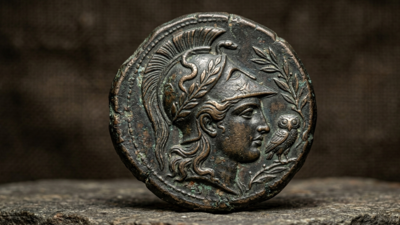
Where others are lost in the virtual cacophony, Jerome, an enthusiastic young historian with big plans for himself, is suddenly faced with something quite exceptional. A humble shard of plain metal, meaningless to most, draws his attention. Bending down, he picks up what seems to be just a shard of a coin, little realising that this particular coin has been around for one thousand years and has journeyed a thousand miles before reaching his hands.A minor error on the part of one person leads to something much more profound. A city steeped in tradition and ravaged by the last century is probably the last place anyone would think of in relation to the ancient cultures of the Mediterranean. Yet it was the very same discovery that made headlines around the world, putting the Spandau district of Berlin under the spotlight. The lesson is clear: history lies buried beneath our feet, and the most interesting history is made by those who thirst for it.Ancient Mediterranean mystery unearthed in central GermanyIt did not take long for experts to pinpoint what the student stumbled upon. According to the State Office for the Preservation of Historical Monuments, Berlin, the item is bronze, originating from Ilion or Troy, and is dated to the Hellenistic era, ranging from 281 to 261 BC. One face bears the portrait of Athena wearing a Corinthian helmet; the other presents her armed with a spear and a spindle, a design element indicative of the culturally vibrant area known today as Turkey.What makes this find so remarkable is the sheer distance between Berlin and the coin’s place of origin. As detailed in the report by DW, researchers are now working to piece together how a coin from the edges of the Greek world ended up in a field in northern Germany. There were no known Greek settlements in Berlin during the 3rd century BCE, and the local Germanic tribes of the time were not typically using Greek currency for their daily transactions.
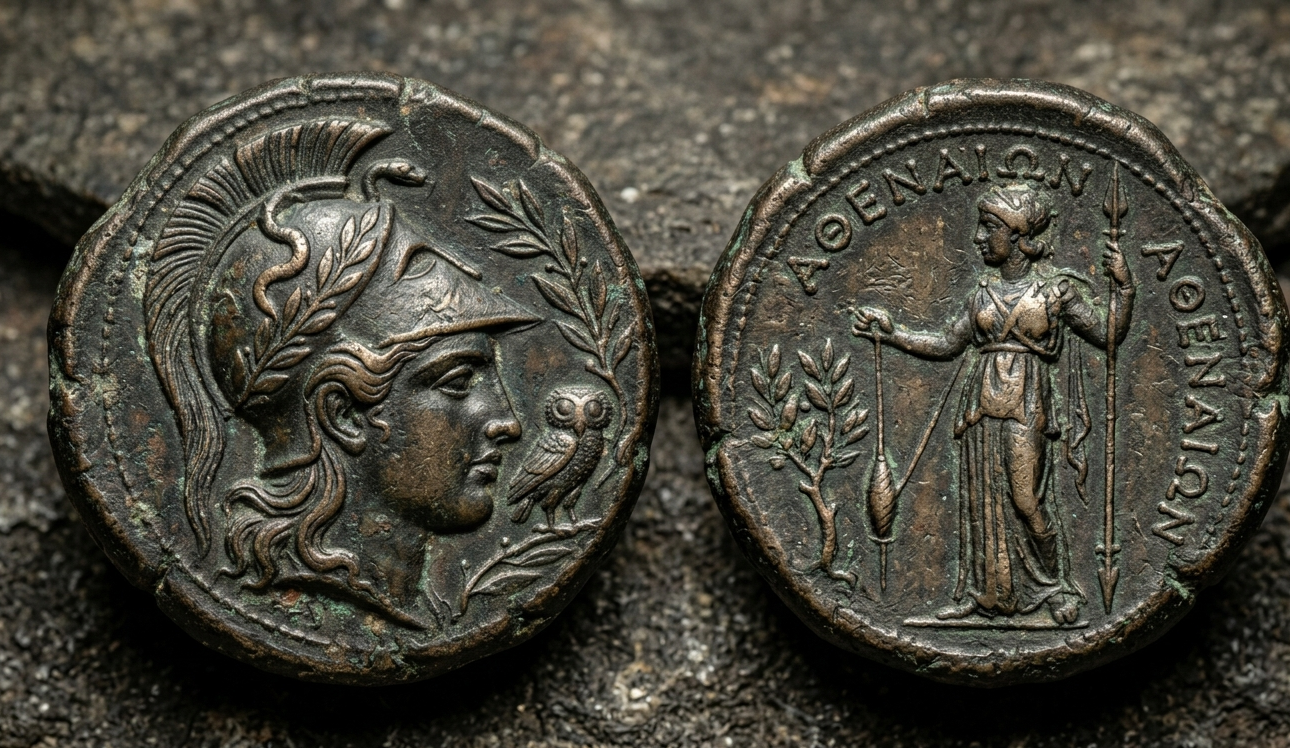
The discovery highlights Europe’s historical interconnectedness. This find is now on display at the PETRI Berlin archaeology lab. Representative Image | Image Credits: Google Gemini
This main thesis refers to the ancient trading routes between the Mediterranean and the Baltic regions. Amber is also called ‘northern gold’ because it was very popular in ancient Greece as an expensive and rare luxury item. The possibility exists that the bronze money passed through many hands and was traded by many traders throughout the river network of Europe. Just one little piece of bronze weighing seven grams shows us that even in the age of iron, Europe was much more connected than we usually assume.Cultural influence on the part of a studentThe discovery made by Jerome can be considered the first finding of an ancient Greek artefact ever made in Berlin. In spite of the intensive excavations that took place in Berlin due to its reconstruction after the war, this small but important piece of history remained hidden under the ground all the while. Many locals have become interested in searching for artefacts in their local parks and fields.The coin has now been placed under the care of the Museum of Prehistory and Early History in Berlin and is on display at the PETRI Berlin archaeology lab. Specialists are studying the site of the find, which was once a burial ground from the Bronze and early Iron Age. Because the coin was found in a context with burnt human bones and other ancient fragments, experts believe it may have been a symbolic gift or a souvenir of a long-ago journey, rather than a lost bit of pocket change.Jerome’s discovery changed the course of his life and emphasised the importance of ordinary people in protecting our common cultural heritage. Significant archaeological discoveries do not usually happen in beautiful laboratories; they come from the field because somebody sees an unusual object and decides to voice their opinion. The coin, which was discovered by Jerome, will forever be a part of Berlin’s history since it connected the European metropolis to its glorious past when Greek seafarers and gods ruled its land.Looking today at this little bronze statue of Athena, it is easy to imagine what an extensive journey it took to get to this field in Spandau. It experienced many battles and the rise and fall of empires, and many centuries of harsh winters and changing seasons. This piece is a vivid reminder of the fact that history does not lie in books; it is tangible and real all around us.
