


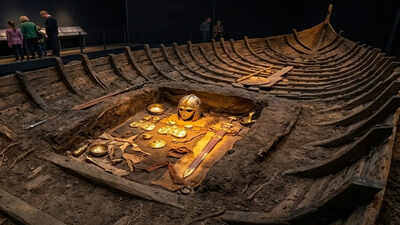
What begins with a simple dig many times results in incredible discoveries. A similar mundane excavation incident in 1939 yielded one of the greatest discoveries made within European archaeology. This was seemingly carried out privately on a plot of land in Suffolk, England.An amateur archaeologist named Basil Brown dug into a series of mysterious grass-covered burial mounds called Mounds I-XII on the estate of a local landowner, Edith Pretty, leading him to quickly become a discoverer of historical significance. As a result of the investigation, the archaeologists discovered the remains of a burial of a colossal vessel in what is now called Mound 1.This particular find helped to show that Anglo-Saxon culture was rather advanced in many ways and thus disproved the stereotype regarding the cultural poverty of Early Medieval Britain.The 27-meter wooden ship buried in the groundAccording to a research published in the National Library of Medicine, Sutton Hoo has been recognised as one of the most historically valuable burial places discovered in the times of early medieval Britain.The first thing to attract attention was the contours of an enormous wooden ship that measured around 27.3 meters long. Although the wooden structure was practically deteriorated, its iron fastenings were well-preserved. It enabled experts to figure out the exact measurements of the craft.The size of the craft indicated that it was a grave for a very powerful person, such as an Anglo-Saxon king or a ruler from the same period. The grave also indicates that there is a link between England and the rest of Northern Europe in that a similar burial ritual was performed to honour their high-status members.According to Oxford Archaeology, Sutton Hoo is one of the most significant Anglo-Saxon graves ever found. The grave itself indicated that medieval England had very developed skills and an organised workforce.What the contents of the grave told about early EnglandIt indicate that the society at the time was highly developed and well-connected. It contained various artefacts such as weapons, jewellery, ceremonial instruments, and some foreign items.Surprisingly, experts have found Middle Eastern bitumen inside the grave during their investigations. According to scientists, it is evidence of the international relations of the country. This counters the outdated belief that early Anglo-Saxon England was isolated from the rest of the world.In fact, Sutton Hoo indicates a system of international trade and cultural exchange which extended far outside the borders of Britain. The artefacts found at Sutton Hoo were not merely an indication of wealth. Rather, they indicate that global interaction took place during what is generally considered a period of isolation.
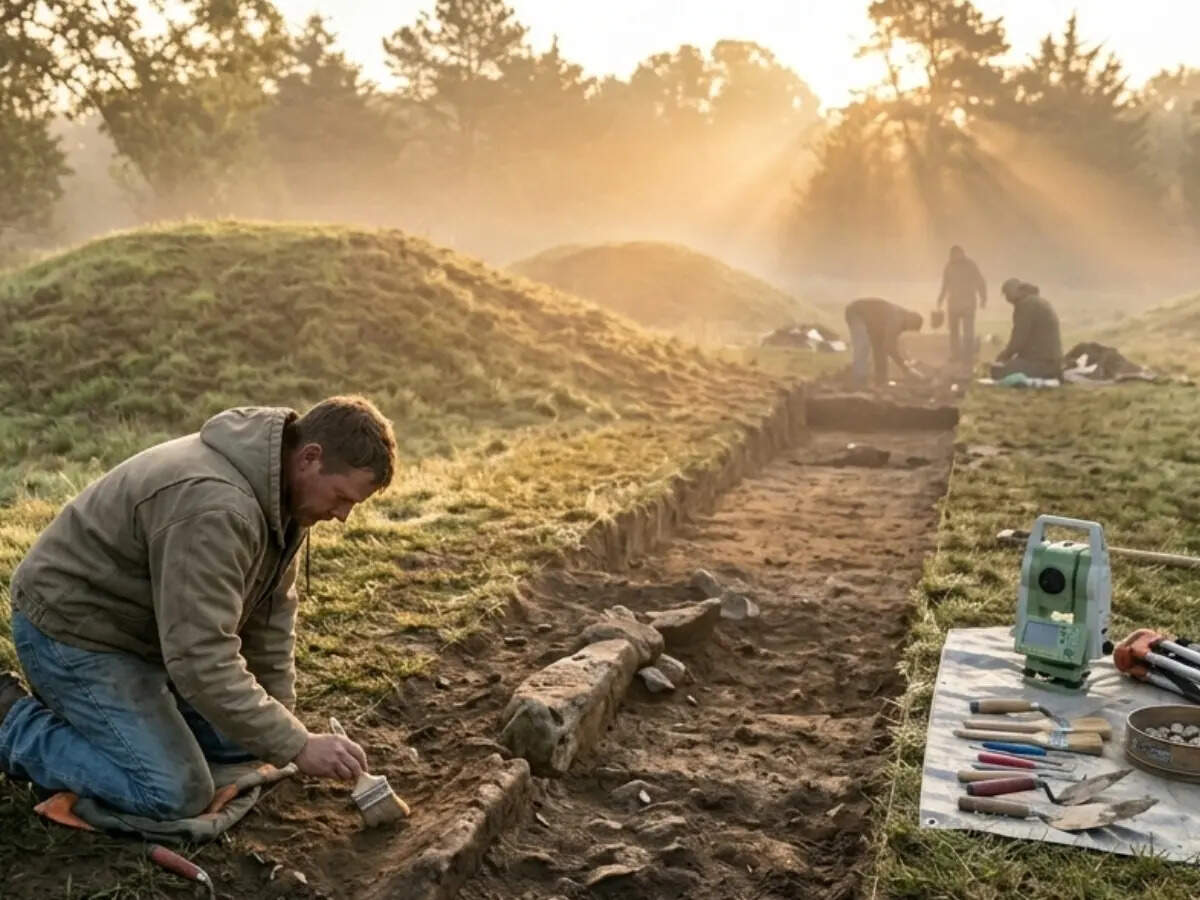
The self-taught excavator’s hunch on private land led to one of Europe’s richest ancient graves. Image credit – Gemini
Sutton Hoo shattered the “Dark Ages” mythFor many years, scholars used the term “Dark Ages” to describe early medieval Europe. This term indicated a period of great cultural backwardness and limited technological development.Sutton Hoo challenged this assumption. It indicated a culture that could produce highly skilled metal work, organise a major construction project, and maintain international relations. It proved that a strong sense of authority and culture existed during this period.Significance of Basil Brown to the Sutton Hoo storyDespite lacking any formal education, he approached his work at the site with a thorough methodology. The ship’s relics were delicate and elusive, requiring meticulous study of the soil pattern and arrangement of rivets.His approach guaranteed the preservation of crucial information. Otherwise, without his expertise, the true significance of his find would not be appreciated fully.While known primarily for its artefacts, Sutton Hoo is a prime example of why careful fieldwork is essential. The case of Sutton Hoo shows that even small projects can make groundbreaking discoveries. Indeed, they can start with just one person studying soil conditions.From backyard dig to a global site of historical importanceToday, Sutton Hoo is regarded as a pivotal archaeological site in Britain. The site is maintained by organisations such as the National Trust and the British Museum. It provides valuable insights into early medieval Europe, particularly in terms of burial customs, trading routes, and social stratification.The significance of Sutton Hoo is more than simply its artefacts. It represents a highly advanced and interconnected civilisation. In 1939, a private dig became the catalyst for historians’ understanding of a particular period.Sutton Hoo remains a powerful reminder that even quiet landscapes can hold history that reshapes the past.
