


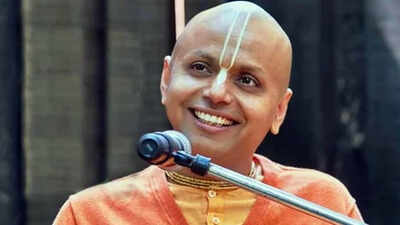
Every problem carries two invisible questions. One drains energy. The other restores it. Most people instinctively ask the first question: Why is this happening to me? Why now? Why again? Why always me? Gaur Gopal Das points out that while this reaction is natural, it quietly traps the mind. It keeps attention fixed on the past, fuels frustration, and rarely leads to clarity.
Drawing from the Bhagavad Gita, he explains that real strength comes from a subtle shift, stop asking why, and start asking what can I do about it now. This perspective, shared in his talks on mindset and resilience on his official YouTube channel, doesn’t deny pain. It redirects energy. And that redirection can change how a problem lives inside you.
Why “why” weakens the mind
When something goes wrong, a breakup, failure, rejection, or loss, the mind wants a reason. It wants logic, fairness, and closure. But most of life’s events don’t arrive with explanations neatly attached. Gaur Gopal Das explains that asking ‘why’ often pulls us into victimhood. The question looks for blame, fate, people, karma, and timing. And while reflection has its place, staying stuck in ‘why’ quietly hands power away.The Bhagavad Gita never promises a life without difficulty. Instead, it trains the mind to respond rather than collapse. Krishna doesn’t spend time justifying pain. He redirects attention toward action, responsibility, and inner steadiness. The moment the mind stops obsessing over causes it cannot control, it becomes available for something far more useful.
The Gita’s quiet instruction: act, don’t agonise
At the heart of the Gita is a repeated emphasis on karma, not as punishment or reward, but as action.
Gaur Gopal Das often simplifies this teaching: life gives situations; we choose responses. The situation may be unfair. The response is always ours. When Arjuna stands frozen on the battlefield, his suffering isn’t just about war. It’s about confusion, fear, and emotional overload. Krishna doesn’t ask him to analyse why life put him there. He asks him to stand up, centre himself, and do what is right, one action at a time.The Gita doesn’t deny emotion. It simply refuses to let emotion paralyse action.
What changes when you ask, “What can I do?”
The moment the question changes, the nervous system relaxes. Why look backward. What can I look forward.Instead of replaying events, the mind starts scanning for options, small ones, practical ones, immediate ones. Even if the answer is modest, rest, apologise, try again, ask for help, and let go; it restores a sense of agency. Gaur Gopal Das reminds audiences that solutions don’t arrive when the mind is busy protesting reality. They arrive when the mind accepts reality and moves within it. This doesn’t mean suppressing pain. It means refusing to let pain become the driver.
Applying the tip to everyday struggles
In failure, why creates shame. What can I do creates learning.In relationships, why are they like this creates bitterness. What can I do creates boundaries or understanding. In anxiety, why am I like this deepens panic. What can I do right now restore grounding.
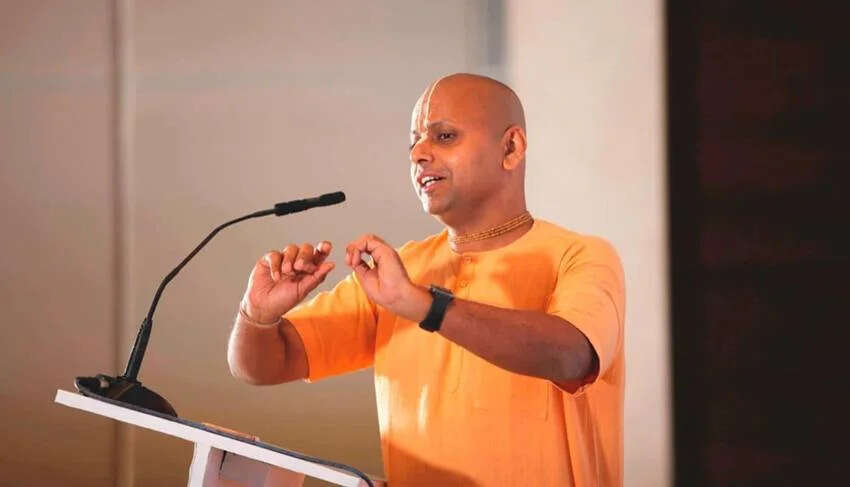
The Gita’s wisdom works not because it is dramatic, but because it is practical. It trains the mind to move from helplessness to responsibility, not heavy responsibility, but empowering responsibility.
Surrender is not passivity
A common misunderstanding is that spiritual acceptance means giving up. Gaur Gopal Das clarifies that the Gita teaches intelligent surrender. Accept what cannot be changed. Act where you can. Surrender removes emotional resistance. Action restores momentum. Together, they turn chaos into clarity.
The quiet strength of this teaching
This single shift doesn’t solve problems overnight. What it does is prevent problems from owning you. The moment you stop asking ‘Why me?’, life stops feeling personal in its cruelty. The moment you ask, ‘What can I do? ‘ life starts feeling workable again. The Bhagavad Gita doesn’t promise easy answers. It promises a steadier mind, one that doesn’t collapse under questions it was never meant to answer. And sometimes, that steadiness itself becomes the solution.