



A U.S. visa bond is a mandatory, refundable financial deposit that certain foreign nationals may be required to pay in order to receive a temporary U.S. visa, most commonly B-1 (business) and B-2 (tourism) visas. This bond serves as a financial guarantee for adherence to US immigration laws, such as the need to exit the United States prior to the expiration of visa terms.The bond requirement is part of a 12-month pilot programme launched by the U.S. State Department in August 2025. Under this programme, visa applicants from selected countries may be asked to deposit USD 5,000, USD 10,000 or USD 15,000, depending on an assessment made during the visa interview. The bond must be deposited before a visa is issued, but payment does not guarantee visa approval.
The amount is refunded if the traveller:
- Departs the U.S. within the permitted stay,
- Does not travel after receiving the visa, or is
- Denied entry at the port of arrival.
However, the bond is forfeited if the traveller:
- Overstays their visa,
- Fails to depart on time, or
- Applies for asylum or refugee status.
Importantly, a visa overstay does not necessarily imply permanent illegal residence; it simply means the traveller did not exit the country by the authorised date.U.S. authorities say the policy is designed to encourage timely departure through financial accountability. However, some critics argue that it effectively creates a price for admission and that a trip to the United States is no longer an affordable option for valid travelers.
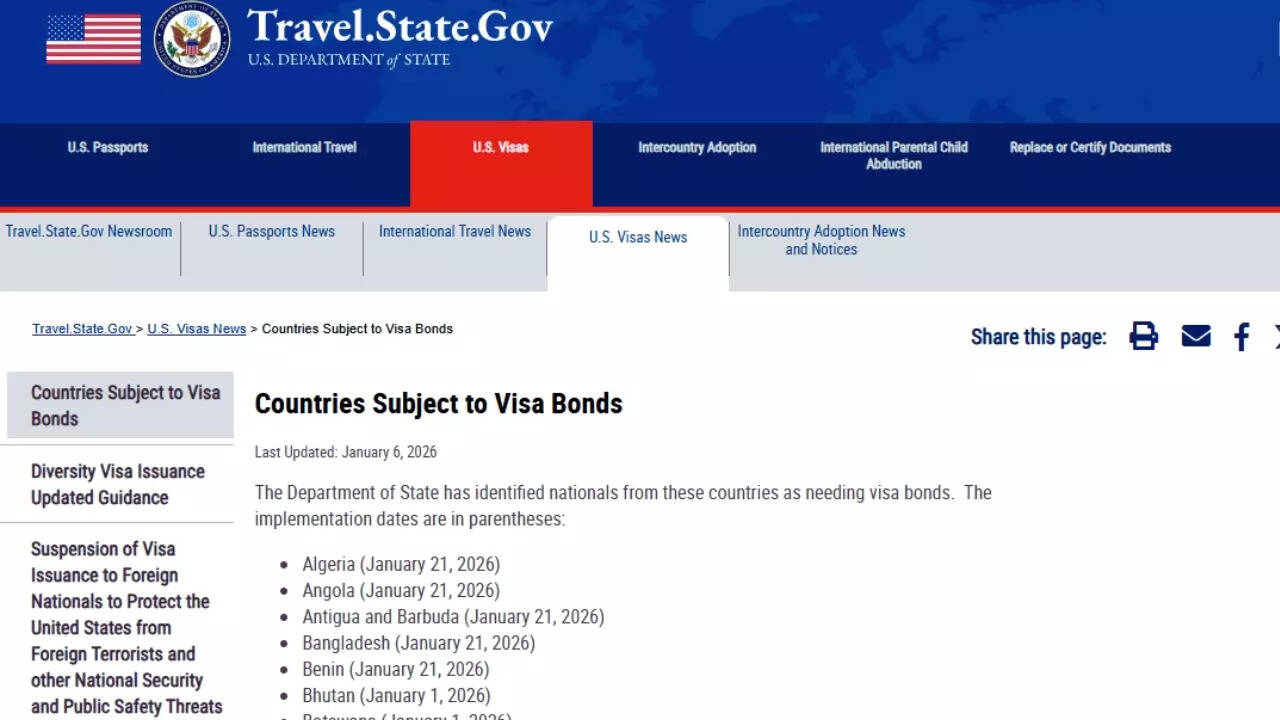
Countries subject to Visa Bonds
U.S. expands visa bond programme to 38 more countries: Is India on the list?
Days after adding Turkmenistan and Bhutan to the visa bond list, the U.S. State Department announced a significant expansion of the programme, bringing 38 additional countries under its scope. While the pilot programme largely targets countries in Africa, the latest additions extend the policy into Central Asia, South Asia and the Pacific, marking a major shift in how the U.S. manages visitor visas.In South Asia, travellers from Bangladesh, Bhutan and Nepal will now be subject to visa bond requirements when applying for U.S. tourist or business visas. In Central Asia, three of the region’s five countries, Kyrgyzstan, Tajikistan and Turkmenistan, are now covered by the programme. In the Pacific, citizens of Fiji, Tonga, Tuvalu and Vanuatu will be affected once the expanded list comes into force on January 21.
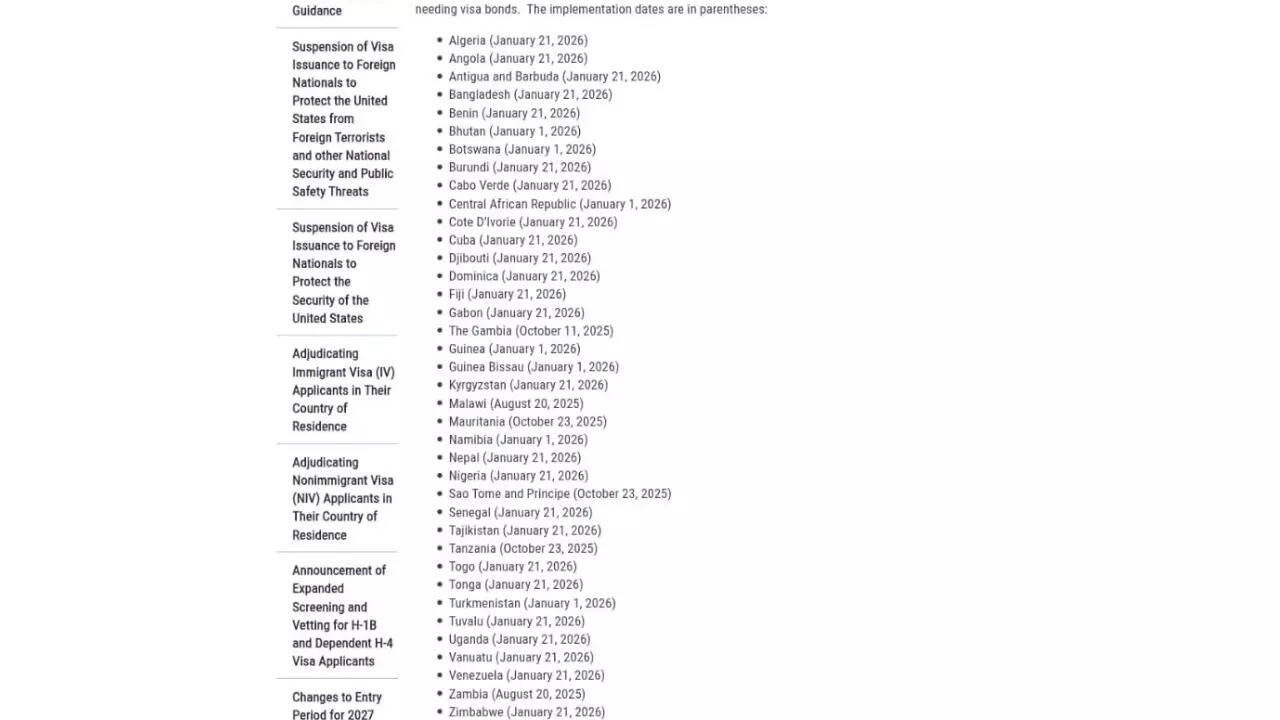
List of countries that require visa bonds
The move represents one of the most consequential changes to U.S. short-term visa policy in recent years, particularly for travellers from smaller or developing nations that have historically sent relatively low numbers of visitors to the United States.Beyond the financial burden, travellers subject to the visa bond programme must comply with strict entry and exit conditions. They are permitted to enter and leave the United States only through three designated airports:
- Boston Logan International Airport,
- John F. Kennedy International Airport in New York, and
- Washington Dulles International Airport.
For travellers from the Pacific islands, this requirement poses a major logistical challenge. Finally, flights from Eastern destinations like those along the East Coast may involve several hauls, in or through Asia, or even Africa. All these will inevitably increase the expenses associated with travelling.And for Indian travellers, India is not on the list as of now.
Why did the U.S. introduce the visa bond policy?
The visa bond pilot programme stems from the Trump administration’s focus on visa overstay data, particularly figures published annually in the Department of Homeland Security’s Exit/Entry Overstay Report. According to a public notice published in the Federal Register, the programme targets countries with:
- Higher visa overstay rates
- Gaps in screening and vetting information
- Citizenship-by-investment schemes
The official rationale is that financial bonds act as leverage, encouraging compliance without imposing outright bans. Critics have pointed out the irony of this approach, especially after President Donald Trump announced a “Gold Card” immigrant visa in September 2025, offering residency options to individuals who make $1 million “gifts” to the US Department of Commerce.
What does it mean for travellers?
For travellers from newly added countries, the visa bond represents a far greater financial hurdle. In many cases the amount of the bond is much higher than several years of average income. Gross national income in Fiji was USD 5,680 per capita in 2024, with travellers required to post a bond of as much as US$15 000. Tajikistan’s GNI per capita was just USD 1,650-so even the lowest bond was outright unaffordable for most of its citizens.As a result, the policy disproportionately affects middle-class travellers, including small business owners, conference attendees, tourists and people visiting family members.As the expanded visa bond programme takes effect on January 21, travellers from affected countries will need to carefully assess financial readiness, travel feasibility and risk before applying for U.S. visas. While U.S. authorities frame the bonds as a compliance tool, critics warn that the policy may reshape global travel patterns, placing the United States increasingly out of reach for ordinary visitors from many parts of the world.For many prospective travellers, the visa bond may not just be a refundable deposit, it may be the deciding factor in whether a trip to the United States is possible at all.