


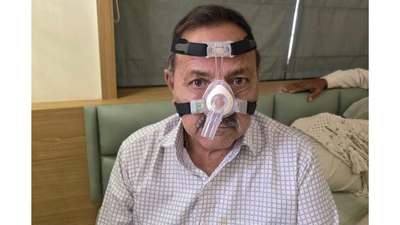
For 25 years, a 62-year-old man lived with a constellation of serious health problems, kidney failure, diabetes, hypertension, a stroke, and crippling migraines that struck every night as soon as he lay down to sleep. He saw neurologists, nephrologists, and specialist after specialist. Brain MRIs were ordered. Tests were run. And yet, the underlying connection between his symptoms went unrecognised for years. The story, which originates from a Reddit post on the r/ClaudeAI forum and later spread widely on X, claims that it took his nephew, a laptop, and a conversation with AI tool Claude to uncover a possible hidden sleep disorder that had not been fully explored earlier.
The one clue AI spotted that specialists missed for 25 years
By the time the family began searching for answers on their own, the uncle’s health had deteriorated significantly. He was on dialysis for kidney failure, managing Type 2 diabetes, being treated for high blood pressure, and recovering from a stroke. On top of all of this, he suffered from severe headaches, but only at night, and only when lying down.That last detail stood out, but had not been treated as a central clue.His neurologist attributed the headaches to stress or vascular changes from his stroke. His nephrologist pointed to dialysis fatigue, a common explanation for exhaustion and discomfort in kidney patients. The symptoms were assessed within their respective specialties, but the broader pattern did not immediately emerge as a single connected issue. The family was left frustrated and without clear answers.Out of concern, the nephew decided to compile everything, medical reports, MRI findings, symptom lists, and medication history, and bring it all to Claude, Anthropic’s AI assistant.What followed was a structured conversation that looked across multiple specialties at once, including nephrology, neurology, pulmonology, and ENT. Claude highlighted patterns that might not have been considered together in a typical consultation setting.One question in particular helped shift the direction of the discussion.“Do the headaches happen specifically when he lies down to sleep?” Yes. “Does he snore?” Loud snoring. For 25 years.To those familiar with sleep medicine, this combination of symptoms can point toward obstructive sleep apnea, a condition in which the airway repeatedly collapses during sleep, interrupting breathing and reducing oxygen levels. While positional headaches are not a definitive diagnostic marker, worsening symptoms when lying flat can be a relevant clinical clue.Claude also referenced research suggesting that a significant proportion of dialysis patients have undiagnosed sleep apnea, and noted the known links between the condition and hypertension, cardiovascular strain, and increased stroke risk.It then estimated a high-risk score using the STOP-BANG screening method and suggested that a sleep study would be an appropriate next step.
The sleep study results were severe
When the family took this information to a doctor and requested further evaluation, a formal sleep study was conducted. The results indicated severe sleep apnea. His breathing was interrupted repeatedly throughout the night, oxygen levels dropped well below normal ranges, and he spent extended periods with insufficient oxygen.This level of untreated sleep apnea can place significant stress on the body over time, affecting the heart, blood pressure, and overall health. He was prescribed a CPAP machine, which helps keep the airway open during sleep by delivering continuous airflow. Following treatment, his sleep improved and his headaches subsided.
What 25 years of ‘dialysis fatigue’ may have overlooked
For years, many of the uncle’s symptoms, including fatigue, poor sleep, and morning discomfort, had been attributed to his kidney disease. While dialysis fatigue is a recognised condition, it can overlap with symptoms of other disorders. In this case, sleep apnea may have been an additional contributing factor that was not fully explored earlier.Sleep apnea is known to affect cardiovascular health and can worsen existing conditions. It does not act in isolation, but it can interact with diseases like hypertension and kidney dysfunction in complex ways. The absence of a cross-disciplinary view may have delayed recognition of this possibility.
Why AI helped connect the dots
This is not a story about AI being smarter than doctors. It highlights a structural challenge in modern healthcare.Specialists are trained to focus deeply on specific systems. A nephrologist focuses on the kidneys. A neurologist focuses on the brain. In complex cases involving multiple conditions, identifying connections across different systems can be challenging within standard consultation settings.By reviewing information across different domains without time constraints, Claude was able to highlight a potential pattern and suggest a direction for further testing. The actual diagnosis, however, came from a clinical sleep study ordered and interpreted by medical professionals.
A new role for AI in healthcare
Cases like this are prompting discussion about how AI can assist in healthcare. One area where it shows promise is in synthesising information across fragmented medical histories.Patients with multiple conditions often see different specialists, and connections between symptoms may not always be immediately apparent. AI tools can help organise information, identify possible patterns, and support more informed conversations with healthcare providers.However, they are not a substitute for medical expertise, diagnosis, or treatment.
What this means for you
If you or a family member have symptoms that remain unexplained, it can be useful to document patterns carefully. Details such as when symptoms occur, including whether they are linked to sleep or body position, can be important.Sleep-related symptoms such as loud snoring, morning headaches, and persistent fatigue are commonly associated with sleep apnea and are worth discussing with a doctor. A sleep study is a standard, non-invasive way to evaluate this.AI tools can be helpful for organising information and exploring possibilities, but any conclusions should always be reviewed by a qualified medical professional.
The bigger picture
Living for decades with an undiagnosed or partially understood condition can have long-term consequences. Earlier identification of contributing factors may improve quality of life and reduce health risks, although outcomes vary from case to case.The uncle is now sleeping better, his oxygen levels have stabilised, and his headaches have improved. While it is not possible to determine how earlier intervention might have changed his overall health trajectory, the case highlights the importance of looking at the full picture.Medicine is a complex and evolving field shaped by time, systems, and specialisation. AI, when used responsibly, can support that system by helping surface questions that might otherwise remain unasked.Note: This article is based on a widely shared account and is intended for informational purposes only. It should not be considered medical advice or a substitute for professional diagnosis and treatment.