


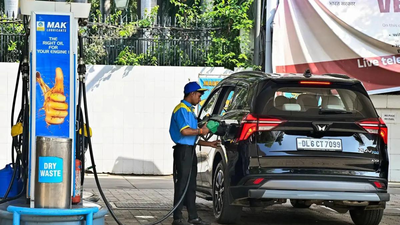
Petrol prices today: Petrol prices in New Delhi on Saturday remained unchanged at Rs 94.77 per litre, while diesel is steady at Rs 87.67 per litre. Similarly, Mumbai sees petrol at Rs 103.54 per litre and diesel at Rs 90.03, with no change from yesterday. Kolkata reported a slight fall in petrol prices to Rs 105.41 per litre from Rs 105.45, and diesel is at Rs 92.02 per litre. In Chennai, petrol rose marginally to Rs 101.06 per litre and diesel to Rs 92.61 per litre.The ongoing US-Iran conflict has disrupted oil supply chains and sent crude prices soaring worldwide.Here are top 10 things to know: Global oil price surge The conflict in West Asia has triggered sharp increases in international crude oil prices. Since February 28, when US and Israeli strikes targeted Iranian facilities, Brent crude briefly surged to $119 per barrel before easing to around $100. West Texas Intermediate (WTI) similarly rose from $70 pre-conflict to over $92, creating supply shocks globally.India’s oil dependenceIndia imports around 88% of its crude oil requirements, with nearly half transported through the Strait of Hormuz, a critical maritime strait located between Persian Gulf and Gulf of Oman.Any disruption here poses an immediate risk to domestic fuel availability. Tehran’s warnings to vessels and insurer withdrawals have complicated tanker movement, impacting supply.Excise duty cut by governmentTo shield consumers from rising global crude prices, the Centre slashed excise duty on petrol from Rs 13 to Rs 3 per litre and removed it entirely on diesel (from Rs 10). The reduction aims to maintain stable retail prices and prevent a direct burden on citizens.No immediate price reliefDespite the excise duty cut, petrol and diesel prices at the pump have largely remained unchanged. Oil marketing companies (OMCs) are absorbing the higher input costs, ensuring that retail prices do not spike amid global volatility.Financial implications of duty cutsThe excise duty reduction is expected to cost the government roughly Rs 1.75 lakh crore annually. This measure offsets potential increases of Rs 24 per litre for petrol and Rs 30 per litre for diesel that would have been necessary due to rising international crude prices.Cargo and export measuresThe government imposed export duties of Rs 21.5 per litre on diesel and Rs 29.5 per litre on ATF to ensure domestic availability and prevent windfall gains in international markets. Private retailer pricing variationsNayara Energy, India’s largest private fuel retailer, increased petrol by Rs 5 per litre and diesel by Rs 3 per litre at its 6,967 outlets to offset input costs. In contrast, Jio-BP, operating 2,185 outlets, has maintained retail prices despite significant losses.Strategic domestic measuresPrime Minister Narendra Modi speaking at the Rajya Sabha said that India maintains strategic reserves of 53 lakh metric tonnes of crude oil, with plans to expand to over 65 lakh MT.Ethanol blending has reduced crude oil imports by 4.5 crore barrels annually. Increased refining capacity, metro expansion and railway electrification have also reduced dependency on diesel, helping stabilize domestic fuel consumption.Diplomatic efforts and global sourcingPM Modi has been actively engaging with Iran, the US, and other countries to secure safe transit of oil and LPG tankers. India has diversified import sources from 27 to 41 countries and procured Russian crude to fill supply gaps. Government initiatives include a Rs 70,000-crore shipbuilding project and the constitution of seven empowered groups to manage fuel, supply chains, and logistics.Consumer protection and public assuranceThe government’s overarching objective is to ensure stable prices, uninterrupted fuel supply, and minimal hardship for consumers. Finance minister Nirmala Sitharaman and petroleum minister Hardeep Puri have emphasised a “people-centric” approach. PM Modi has reassured citizens that India has adequate fuel reserves and supply mechanisms, while strategic interventions will continue to absorb global price shocks.