


Israel has reportedly begun rationing the use of its high-end missile interceptors in an effort to preserve stocks of its most advanced defensive systems, as daily Iranian barrages continue through the fourth week of the war, as cited by The Wall Street Journal.The country has relied heavily on its top-tier Arrow interceptors to shoot down ballistic missiles during the current conflict and in last June’s confrontation with Iran. More recently, Israel has also deployed upgraded versions of its David’s Sling system, originally designed to intercept rockets and shorter-range ballistic missiles, to target larger and longer-range threats, with mixed results.A pair of Iranian ballistic missiles recently struck the towns of Dimona and Arad directly after Israeli forces attempted but failed to intercept them using modified versions of less advanced munitions.Israel faced another intense barrage on Thursday, with residents reporting constant sirens and several missile strikes across the country.The move to use less capable munitions highlights the growing strain on militaries across the region as they deplete costly and difficult-to-produce weapons while defending against waves of Iran’s mass-produced missiles and drones.
.
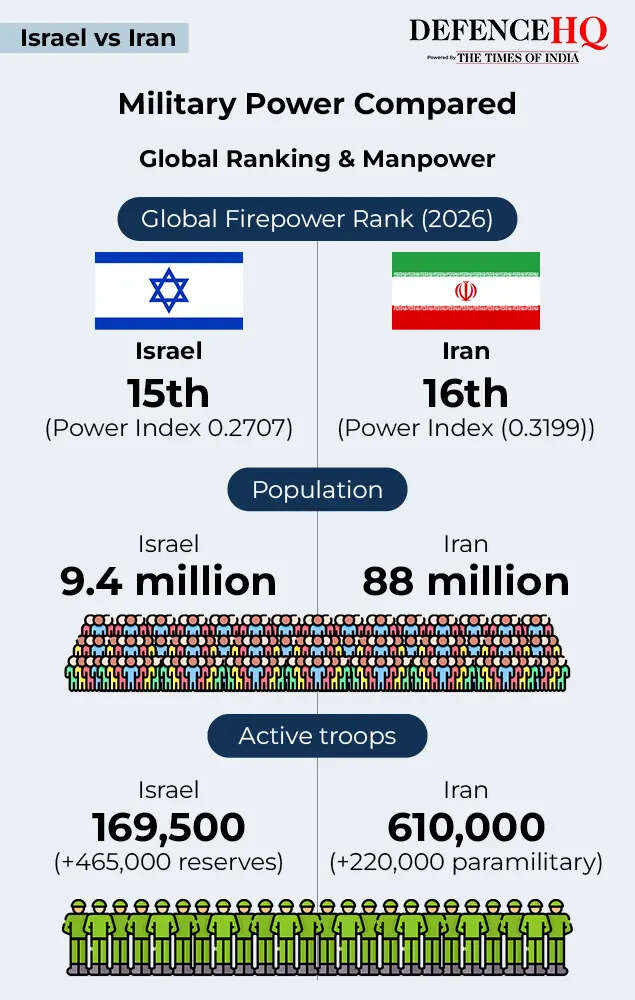
With every incoming missile, Israeli officials must decide whether to allow it to fall in uninhabited areas or attempt an interception, and if so, which defence system to deploy. They must also weigh the need to preserve interceptor stockpiles for potential threats in the days ahead.Since the start of the war, Iran has launched more than 400 missiles and hundreds of drones at Israel. While the volume was higher in the early days of the conflict, the barrages have remained relatively steady in recent weeks. The situation has been further complicated by Hezbollah firing dozens of projectiles at Israel daily.
From Iron Dome to Arrow, Israel’s defence systems counter threats at different ranges
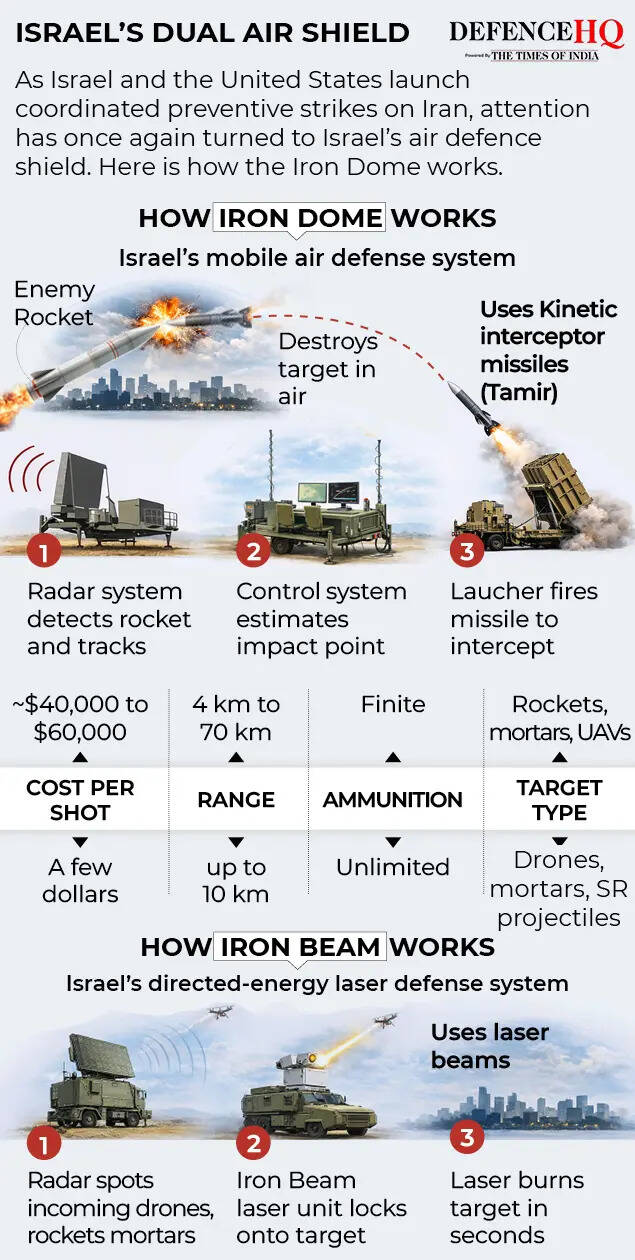
Israel’s multilayered air-defence system, much of it developed in partnership with the United States, uses different types of munitions designed to counter a range of aerial threats.At the lower tier of Israel’s multilayered air-defence system is the Iron Dome, used to intercept short-range rockets at a cost of tens of thousands of dollars per interceptor. It is followed by David’s Sling, which is designed to counter long-range rockets, tactical ballistic missiles and cruise missiles.The famous “Iron Dome” forms just one layer of this defence network, intercepting short-range artillery shells and rockets.
.
At the top tier of Israel’s air-defence system is Arrow 3, designed to intercept long-range ballistic missiles outside the Earth’s atmosphere and regarded as among the most advanced anti-missile systems in the world.An earlier variant, Arrow 2, remains in use to counter medium- to long-range missile threats.Despite technological differences among these systems, they all consist of three core components: IDF personnel who operate them, radar systems that detect incoming threats, and the interceptors used to neutralise them.
Missile stocks strained as Israel upgrades defences amid sustained attacks
Israel entered the current conflict with its stock of Arrow interceptors already reduced following last year’s war with Iran. The 12-day confrontation significantly depleted Israel’s anti-ballistic missile inventory, as well as that of its ally, the United States.According to a Washington-based research centre, Israel and the US intercepted 273 of the 322 Iranian missiles they attempted to stop during that conflict, an 85 per cent success rate, as cited by the Conversation.Because a large number of these interceptors were used only recently, Israel and the US are unlikely to have fully replenished their stockpiles before the current war began.Another indication of the strain on missile defences is the reported move by the United States to shift parts of its THAAD missile defence system from South Korea to the Middle East. The move suggests Washington may have to shoulder more of the region’s defensive burden, potentially placing further pressure on its own resources.Israel has attempted to broaden its defence capabilities through modifications, including software updates aimed at enabling lower-tier interceptors to better counter longer-range missile threats.The David’s Sling system also underwent a series of upgrades and tests shortly before the war with Iran to enhance its operational range.“We are trying to stretch it to the upper tier and push the interception as far from the ground as possible,” said Ran Kochav, a brigadier general in the reserves and former commander of Israel’s air and missile defence forces, as cited by WSJ. “It works well in some areas, and in others it doesn’t.”Gulf countries such as the United Arab Emirates, Qatar and Bahrain are under similar pressure and have been asking the US for interceptors. To help address the capacity concerns, the US has flooded the region with counterdrone systems, which can shoot down lower and slower-flying threats like Iran’s Shaheds. But the world is facing problems with supplies. Among them, interceptors needed for the US Thaad systems, which are used to defend US allies, are running low amid a global shortage in stockpiles and long production cycles. At least one Thaad system deployed to Jordan was damaged in an Iranian drone attack, according to US officials.