


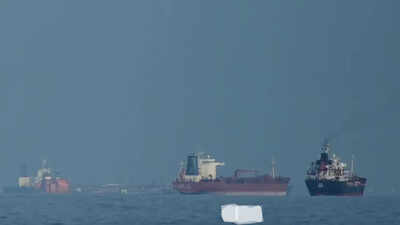
NEW DELHI: A US-sanctioned tanker carrying Iranian crude oil has altered its course mid-voyage, dropping India as its destination and rerouting to China, in a move that underscores ongoing challenges in resuming oil trade with Iran.The Aframax tanker Ping Shun, which had been signalling Vadinar in Gujarat earlier this week, is now indicating Dongying in China as its destination, according to ship-tracking firm Kpler. The vessel was expected to deliver what would have been India’s first Iranian crude cargo since 2019.“An Iranian crude vessel ‘Ping Shun’ that had been en route to Vadinar, India, over the past three days has dropped India as its declared destination near arrival and is now signalling China,” said Sumit Ritolia, Lead Research Analyst at Kpler.The shift in destination appears to be linked to payment-related concerns, with sellers tightening financial terms amid ongoing sanctions complexities.According to Ritolia, the trade environment has moved away from earlier credit arrangements towards upfront or near-term payments, complicating transactions.“While such mid-voyage destination changes are not unprecedented with Iranian crudes, they highlight the increasing sensitivity of trade flows to financial terms and counterparty risk,” he said.He added, “If the payment issues are resolved, the cargo could still make its way to an Indian refinery. However, the episode underscores how commercial terms are becoming as critical as logistics in determining Iranian crude flows to other countries apart from China.”There is no confirmation that the vessel’s currently signalled destination is final, as AIS tracking data can change during transit.The cargo aboard Ping Shun, estimated at around 600,000 barrels, was loaded from Kharg Island in early March and had an expected arrival in Vadinar on April 4.If delivered, it would have marked India’s first import of Iranian crude in nearly seven years. Imports were halted in May 2019 after the United States tightened sanctions on Iran’s oil exports.India had previously been a major buyer of Iranian oil, with imports reaching about 518,000 barrels per day in 2018. This declined to 268,000 bpd in early 2019 during a temporary sanctions waiver period before stopping entirely.At its peak, Iranian crude accounted for around 11.5 per cent of India’s total oil imports, with refiners favouring Iran’s light and heavy grades due to compatibility and favourable terms.Despite a recent US waiver allowing limited purchases of Iranian oil at sea for 30 days, financial and banking constraints remain a major obstacle.Iran continues to be excluded from the SWIFT system, making international payments difficult. Earlier mechanisms, such as euro payments routed through intermediary banks, are no longer available.The temporary waiver, aimed at easing global oil prices amid ongoing conflict in the region, is set to expire on April 19. Analysts estimate that around 95 million barrels of Iranian oil remain stored on vessels at sea, with a portion potentially available for buyers like India.Vadinar, the originally indicated destination, houses a major refinery operated by Nayara Energy, backed by Russian oil major Rosneft.India’s oil ministry has maintained that any resumption of Iranian imports will depend on techno-commercial viability, signalling a cautious approach amid geopolitical and financial risks.The rerouting of the tanker highlights how sanctions, payment mechanisms and risk perception continue to shape global oil trade flows, with China remaining a more consistent buyer of Iranian crude under current conditions.(With inputs from PTI)