


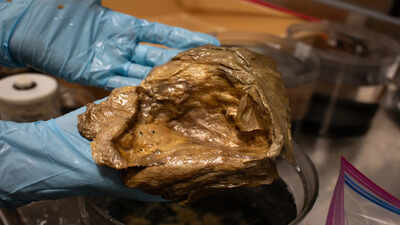
The ocean holds endless mysteries that can enchant any scientist, making them childlike with wonder at the marvels it holds. The last week of August 2023 saw a group of scientists test a remotely operated submarine in the dark world below the surface of the ocean off the coast of Alaska.The camera zoomed in, and the group became silent as if time itself had stopped. A minuscule fissure along the seam opened up, and a flash of gold emerged, glowing so brilliantly that it was almost surreal. It no longer resembled an egg but rather a priceless find recovered from the depths of the ocean, that is, if such a thing could ever be believed. In that very moment, the modern-day control room turned into a scene from a fairy tale. The scientists knew that what they were seeing was completely unprecedented, and in the blink of an eye, the possibility that mankind could prove the existence of extraterrestrial life would capture the imagination of millions.The quest for the golden gemWhat made it hard to identify this golden oddity, however, was not its colour alone but rather its identity. What kind of organism was it? Could it be the shell of a strange new sea creature, a rare piece of coral, or something else entirely? To find out more about the object, the crew used a unique suction device to gently raise it to the surface.
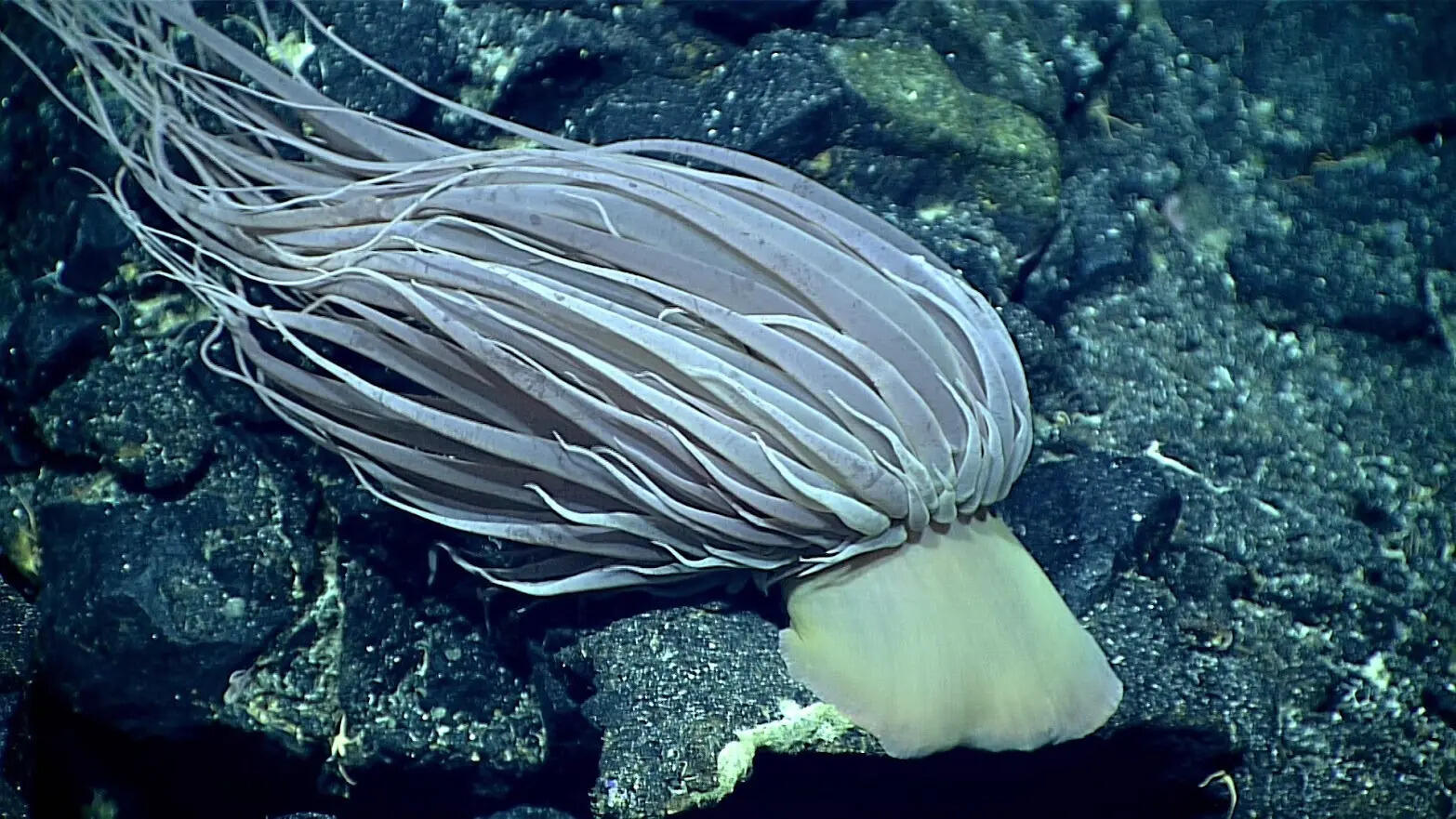
This unprecedented find highlights the vast unexplored mysteries of the deep ocean and the ongoing quest to understand its biodiversity. (Image credit: NOAA Ocean Exploration, Deepwater Exploration of the Marianas)
According to a detailed report by NOAA Ocean Exploration, the specimen was taken back to land for rigorous DNA testing. While it looked like a solid piece of gold through the camera lens, the texture was actually soft and skin-like, similar to silk. The researchers used genetic sequencing to compare the orb to every known species in the marine database. Even after the initial tests, the results remained elusive, proving that the deep ocean still holds onto its secrets tighter than we realise.It was established that the object was not mineral in nature but biological. While humans had hoped for a sea monster, the scientists were excited by the data itself. According to ScienceAlert titled Mysterious Golden Orb at The Bottom of The Ocean Finally Identified, DNA analysis suggested that the orb was the eggshell of some unknown marine animal. The small hole observed indicates that the creatures have already hatched and gone into the depths of the Pacific Ocean.Why the deep ocean is still relevant to usFinding a golden egg in a corridor of underwater mountain ranges proves once again how much there is to learn about our planet. While we have thoroughly explored other planets and mapped the moon with precision, we still do not know more than twenty per cent of our oceanic world. Every mission undertaken by an autonomous underwater vessel, such as in the Seascape Alaska project, uncovers evidence that forces us to rethink basic biology principles.The finding of the golden orb has led to a resurgence of efforts in preserving the deep sea. It only takes one expedition for a team to discover something unexplainable in nature, something with a glow that defies all classification. However, one can only wonder at what else is waiting to be discovered in the trenches and near those vents right beneath the surface.In today’s world, laboratories all around the world have been studying the golden orb to identify its actual parental species. This is an amazing symbol of the mysteries of our world, despite being very much connected and categorised by humans. For those who have had a chance to see the golden light flash before their eyes in the laboratory, this discovery has been an amazing experience of wonder. And one that proves that nature will always give us something much more valuable than gold.