


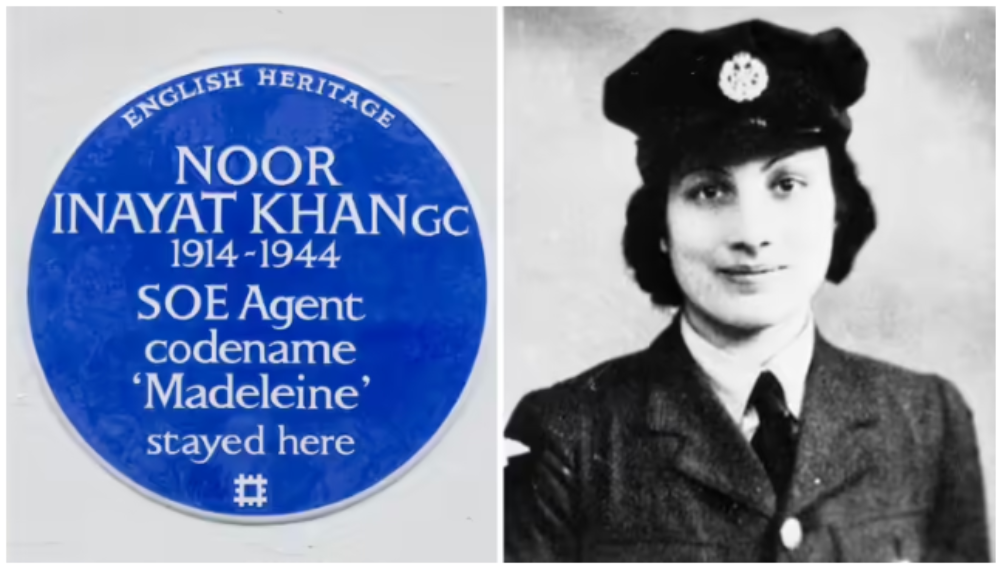
Making of a spyWhen the Second World War reached its pivotal turning point, Britain found itself in desperate need of wireless operators — a role that had one of the highest casualty rates within the clandestine services. Noor Inayat Khan joined the Women’s Auxiliary Air Force (WAAF), a division of the British Royal Air Force formed in 1939.Her skills, combined with her fluency in French, quickly caught the attention of the Special Operations Executive (SOE), a covert organisation set up by Winston Churchill with the mission to “set Europe ablaze”. On February 8, 1943, she was recruited into their ranks.Her selection was met with controversy within the SOE. Noor had not completed all the necessary phases of training, and some officers questioned whether she possessed the hardened persona expected of operatives. One colleague famously remarked, “She was a woman of haunting beauty, far too conspicuous, twice seen, never forgotten.” The concern was that her delicate features and striking presence would make her an easy target in the Gestapo-controlled streets of Paris.However, the SOE was in urgent need of operatives, especially after a series of devastating arrests left London blind in several key French sectors. Noor was flown into Nazi-occupied France on June 16, 1943, becoming the first female wireless operator to be deployed into the field. While the SOE anticipated her mission to be short-lived — perhaps just a few days, or weeks at best — Noor defied all expectations.She arrived in France aboard a Lysander aircraft, one of the most dangerous methods of insertion during the war. Almost immediately, disaster struck: a massive Gestapo sweep resulted in the arrest of nearly her entire network. Noor became “the last operator left in Paris”, the only British link between the Resistance and London at a time when the city was teeming with informers and spies. Despite the overwhelming risks, she chose not to return to safety. Instead, Noor made the fateful decision to stay, a choice that would seal both her legacy and her ultimate sacrifice.
How she dodged Gestapo patrolsFor four months, Noor operated as the sole SOE wireless link in Paris, skillfully evading German spy hunters who scoured the city in vans, searching for clandestine signals. While the average life expectancy for an operator was only six weeks, Noor lasted nearly three times that, constantly shifting locations, carrying her transmitter across rooftops and courtyards, and transmitting vital reports for Allied planning.Her transmissions were so crucial that, despite serious security concerns, SOE headquarters begged her to stay in France. But Noor refused evacuation, determined to keep the network running.One account describes how she successfully evaded Gestapo patrols, even as German counter-intelligence focused “all its resources for her capture”. In the Resistance circles of Paris, rumours spread about a mysterious, unidentified woman operator who seemed to appear and vanish like smoke.In October 1943, however, Noor was betrayed. The exact source of the betrayal remains unclear — some point to a French double agent, others to a jealous acquaintance — but all agree that her cover was blown by someone she trusted.When the Gestapo apprehended her, she fought with such ferocity that the arresting officers were reportedly stunned. Even when captured, her codename, ‘Madeleine’, remained elusive, and she refused to divulge any names, codes, or locations.Her interrogation lasted five weeks. As JO Fuller wrote, her tale of imprisonment, failed escapes, and unyielding silence “make enthralling reading… a book which will teach women courage and men humility”.Noor made two audacious escape attempts while imprisoned, earning her the rare classification of a “highly dangerous and uncooperative” prisoner — a designation almost never given to women. It was this fierce defiance that ultimately led to her transfer to Germany, shackled in heavy chains.
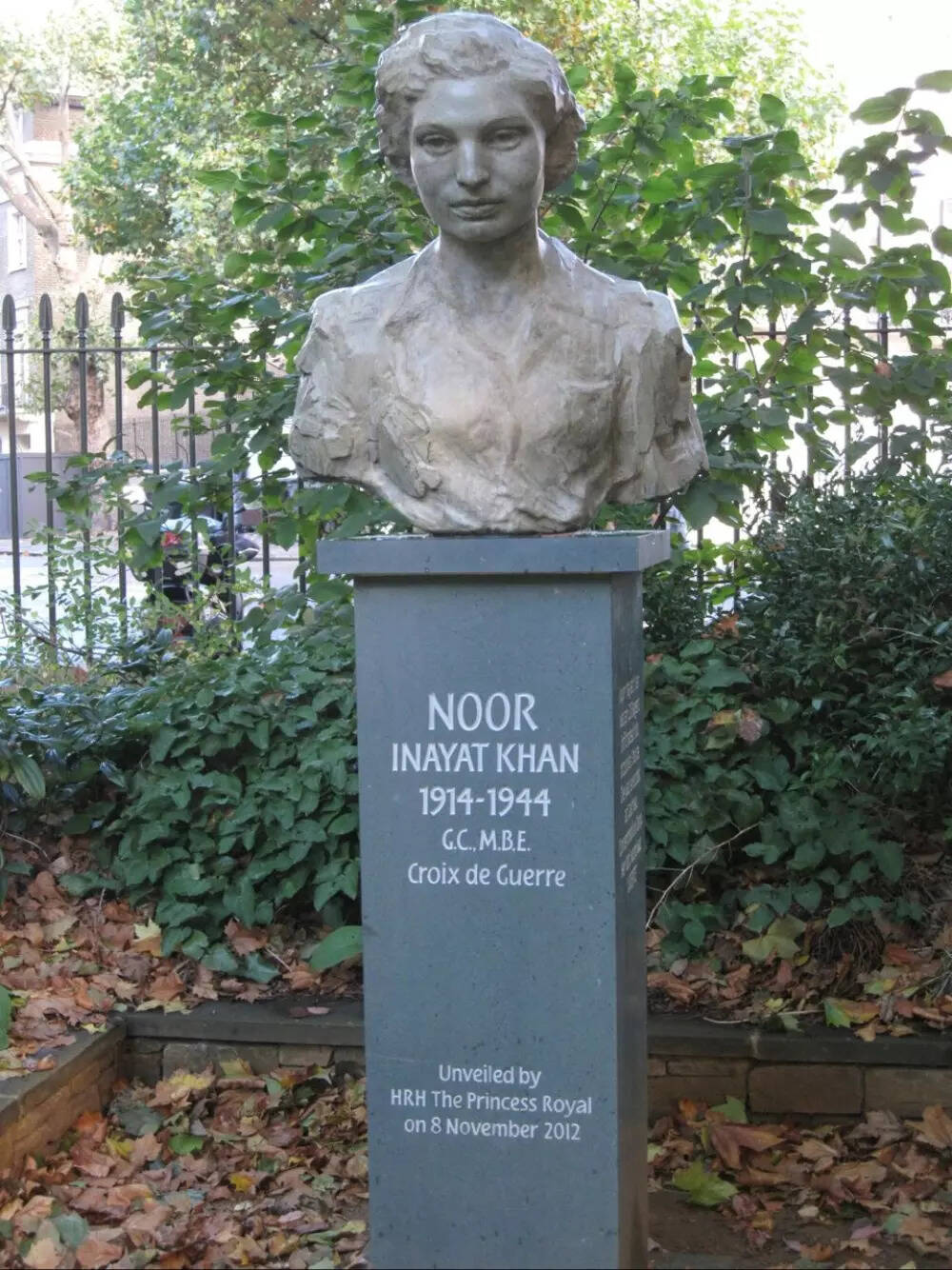
Her final word – ‘Liberte’Noor was eventually deported to Dachau concentration camp, where she was tortured, kept in chains, and repeatedly interrogated. Even under extreme brutality, she gave away “no information of any kind,” as the 1953 account notes. What distinguishes her story is not only her courage but the moral clarity that she displayed until the end.On September 13, 1944, Germany executed Noor. She was only 30 years old. Witnesses recorded that her final word before being shot was “Liberte”. As one tribute described, “The day the Germans shot Noor Inayat Khan at Dachau, they destroyed something uniquely beautiful; their bullets tore the life from a being of fire and air and courage.”Her executioners never discovered her real name. They knew her only as ‘Madeleine’, the alias she fiercely protected. For a woman raised in pacifism, committed to harmony and music, her endurance under torture became one of the most extraordinary wartime narratives of any Allied agent.Her story also carries modern resonance. As one account observes, “Noor’s story perhaps becomes relevant at this time when Muslims in the West are broadly seen as terrorists.” Her life, sacrifice, and unflinching stand against fascism challenge narrow narratives about identity, faith, and belonging.Honour and recognitionFor her courageous actions, Noor was posthumously awarded the George Cross, the UK’s highest civilian honour, in 1949, and the French Croix de Guerre, a military distinction, in 1946.In August 2020, Noor became the first woman of Indian origin (and the first of South Asian descent) to be honoured with an English Heritage ‘blue plaque’ in Bloomsbury, London, where she had once lived.In recent years, Noor’s legacy has experienced a resurgence, thanks to books, memorials, and increasing official recognition. In 2023, Queen Camilla unveiled a new portrait of Noor at the RAF Club in London, in a room dedicated to her memory.Now, France has commemorated Noor through a series of stamps, which celebrate “men and women who said no,” who, as the French description reads, “became involved in intelligence networks, exfiltration, sabotage… Risking their lives, they saved the country’s honour and placed it on the winning side”.The set includes other resistance figures, such as Jean-Pierre Levy and Violette Szabo, but Noor’s presence carries a special significance. She represents not only the values of resistance but also a unique, cross-continental identity — Indian, American, French, British — woven together in one extraordinary life.