


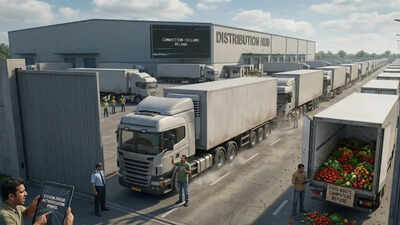
The modern global food supply system is increasingly reliant on a hidden digital framework (often referred to as the ‘Authorisation Gap’ for regulating the distribution and sale of agricultural products. A research study released through ScienceDaily illustrated how vast amounts of safe and usable food continue to be wasted because those products do not exist in the automated logistics databases used to manage the global movement of goods. As a result of these digital-first protocols in our supply chains, every food product must be validated through a software application to be legally transferred, insured, or sold. Therefore, when the digital matrix or application fails, the material good effectively ceases to exist in the marketplace. The growing reliance upon opaque algorithms and artificial intelligence to project demand has created a fragile ecosystem in which even a single software failure can cause localised and regional shortages of food when there are abundant supplies.
Food is wasted as computers refuse to ‘recognise’ shipments
A principal cause for widespread wastage in food service is a disconnect between the physical inventory and the digital records associated with each item. The modern approach to logistics uses both ‘Release Codes’ and an automated manifest system to ensure that the information exists about the shipment and is being delivered at all points of contact with the consumer. A glitch in a system or an issue with data mismatching will cause truck drivers to be unable to unload their shipments in the facilities as would normally be done, due to the receiving computers not being able to ‘verify’ relevant information (origin, temperature history, and safety data). The result is a loss of products at a systematic scale, illustrated by fresh produce decomposing in distribution centres; supermarket shelves remaining empty; and the product not arriving at the retailer’s store because of the ‘ghost’ of the shipment’s digital record.
Why technical glitches create physical food barriers
An issue raised by researchers at Durham University is the degree to which this process removes human involvement from food distribution; the more a supply chain becomes automated, the less backup skillsets are being trained for the workforce. The current staff can, in many cases, undertake manual entries when an automated authorisation failure occurs; however, typically, this manual work is not part of their job or training. As a result, food exists physically but is unable to be accessed because the workforce lacks the digital permission/knowledge to do so; as such, there is a complete standstill within the operation for every minimal business-technical issue (which can have severe consequences for the business).
Why digital connectivity is the new food security
‘Just-in-time’ delivery has resulted in increased efficiency within the food system, at the same time as it has also introduced substantial brittleness into the supply chain due to dependency on rapid, real-time data. According to the UK Government Office for Science, interruptions in digital connectivity stop the flow of goods by stopping any movement of goods. There are no paper-based contingency plans to back up the lack of buffer inventory. When a shipment is not recognised due to a software ‘refusal’, this causes a cascading effect which can create a regional food security crisis in 48 to 72 hours due to a disruption at one of the three stages in the distribution of goods to retailers.