


Nature hides wonders and warnings in equal balance.While some plants contribute with beauty and nourishment, attracting us with their colourful flowers or tasty fruits. Others quietly stand guard, hiding risks that can hurt those who are not aware of their hidden dangers.Be it coastal shores or dense forests, some of these plant species have evolved interesting immunity that influence our entire ecosystems and it is these plants that call for caution amid curiosity.Amid these warnings and caution, one tree emerges as an example of extreme toxicity. Known as the “Tree of Death,” the manchineel which embodies nature’s most unforgiving warnings!
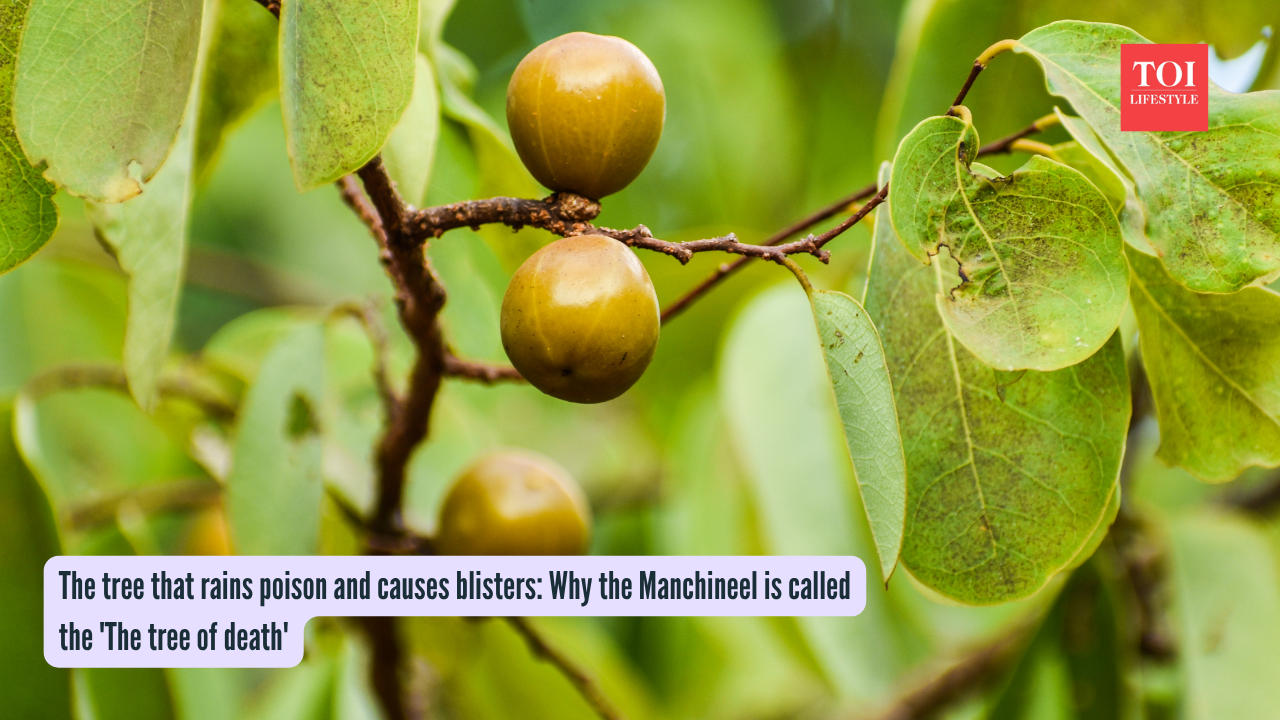
The tree of death (Photo: Canva)
What is the ‘tree of death’?
While the name may sound bizarre, it is derived from the Spanish word “manzanilla,” or “little apple,” due to the small, yellow-green fruits that grow on the tree, and are similar in appearance to crabapples but carry a lethal secret.Now marked with a warning sign and red cross, the Manchineel is natively found in the coastal regions of the Caribbean, Florida, the Bahamas, Central America, and northern South America. This tree can grow up to 15-50 feet in height, often looking similar to a shrub in harsher environments.Every part of the tree including the bark, leaves, sap, and fruit, contains powerful toxins like phorbol esters and hippomanins, highly impactful toxic compounds found in the milky sap and tissues, making it one of the world’s most poisonous trees.
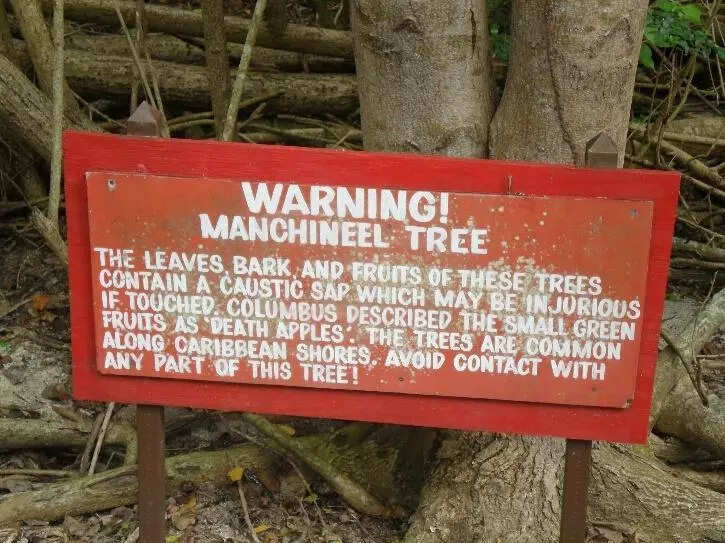
Manchineel often referred to as ‘tree of death’.
It is hazardous to the skin and eyes
It is often warned to avoid standing under its branches in rain as it disperses water-soluble toxins, causing severe skin blisters on contact. According to a Univerity of Florida publication, the milky sap triggers burn-like rashes, acute dermatitis, headaches, and breathing difficulties; even smoke from burning wood can inflame eyes or cause temporary blindness. The tree’s leaves measure 2-4 inches long with fine teeth like projections, and each has a small gland at the stem joint that adds to the risk.
Fruit’s fatal trick
The 1-2 inch sized fruits of the trees, called the “manzanita de la muerte” or “little apple of death,” taste sweet initially but are dangerous and show their true nature only moments later.According to radiologist Nicola Strickland, as quoted by Nosowitz in Atlas Obscura, “I rashly took a bite from this fruit and found it pleasantly sweet. Moments later we noticed a strange peppery feeling in our mouths, which gradually progressed to a burning, tearing sensation and tightness of the throat. The symptoms worsened over a couple of hours until we could barely swallow solid food because of the excruciating pain and the feeling of a huge obstructing pharyngeal lump.” Effects include vomiting, bleeding, mouth boils, and potential death from digestive damage.
It might be life threatening but helps strike the right balance in nature
According to the Atlas Obscvura, in 1521, Spanish explorer Juan Ponce de León is said to have died from a poisoned arrow tipped with manchineel sap during a Florida skirmish with Calusa warriors.Despite the dangers, manchineels stabilise beaches against erosion with deep roots and act as windbreaks. Certain iguanas, like the garrobo, safely eat the fruit and nest in branches.