


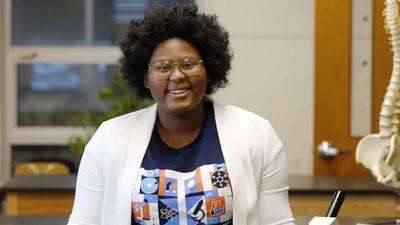
At just 17, Dasia Taylor turned a science fair idea into a medical innovation with real-world promise. While studying at Iowa City West High School in Iowa, she began working on colour-changing surgical sutures that could signal infection before a wound became visibly worse. Her inspiration came from a practical problem: expensive “smart” sutures already existed, but they were not accessible to many patients and relied on technology that was not always realistic in low-resource settings. Taylor used beet juice and carefully tested thread materials to build a low-cost alternative that could help patients and doctors spot infection earlier.
How Dasia Taylor created colour-changing surgical threads
Taylor started the project in October 2019 after her chemistry teacher shared information about science fairs with the class. She had already been thinking about medicine, and she became interested in sutures after reading about advanced threads that can detect changes in a wound. Taylor said the idea did not begin as a polished invention, but as a school project that grew through experimentation, research and persistence.The breakthrough came from beet juice. Taylor found that beets change colour at about the same pH level as an infected wound. In her tests, bright red beet-dyed thread shifted to dark purple when the pH changed to a level associated with infection. The cotton-polyester thread she tested changed colour after about five minutes under an infection-like pH. In the invention, the beet-derived dye acted as the chemical sensor that reacted to infection-related pH changes, while the cotton-polyester thread served as the physical material carrying the colour-changing compound.
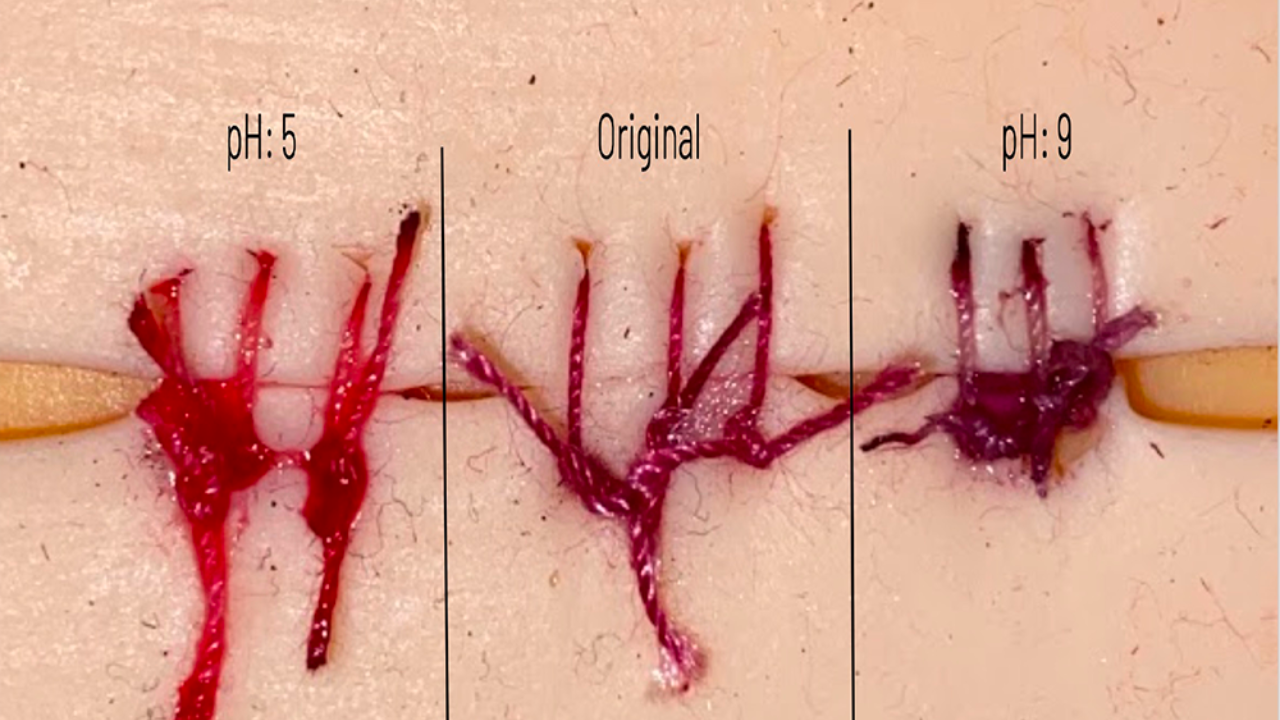
Under infection-like pH conditions, the cotton-polyester thread changed from bright red to dark purple within five minutes.
A low-cost alternative to smart sutures
Taylor’s work was driven by accessibility. She had read about high-tech sutures that can sense changes in electrical resistance and send alerts to smartphones or computers, but she recognised that such tools are expensive and depend on devices and internet access that many people do not have. Her goal was to create something more affordable and equitable, especially for lower-income communities and countries where infection detection can be harder and health infrastructure more limited.Her invention drew attention because it combined science, public health and social equity. She said she approached the project with an “equity lens”, and later described her company name, Variegate, as a reflection of both colour change and diversity. She is now a student at the University of Iowa while continuing to work towards patenting the sutures and developing her health-focused venture.
Recognition and national attention
Beyond her invention, Dasia Taylor has become widely recognised as a young STEM innovator and advocate for accessible healthcare. Born in Chicago in 2004, she later moved to Iowa and graduated from Iowa City West High School before attending the University of Iowa. Taylor has also spoken openly about growing up in a single-parent household, with her mother raising her at a young age, and has said those experiences shaped her focus on equity and healthcare accessibility.Alongside her scientific work, she has been active in educational and racial equity advocacy since her school years, including attending school board meetings and supporting discussions around anti-racist curricula. Her work has been featured on national platforms including PBS NewsHour and The Ellen DeGeneres Show.Taylor’s project won awards at state and regional science fairs before reaching the national stage. In January 2021, she was named one of 40 finalists in the Regeneron Science Talent Search, one of the most prestigious high school science competitions in the US, where she also received the Seaborg Award. Her story has since been highlighted by science and education organisations as an example of student-led innovation with practical impact.
