


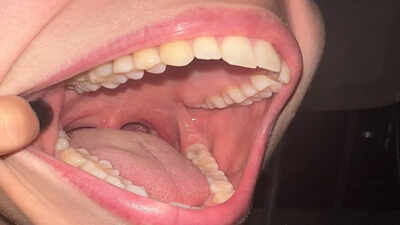
Losing a tooth has been a loss of confidence, a sign of ageing and a failure to maintain health for many, causing anxiety and social withdrawal for many. The only thing left to do is to follow through with the traditional methods, such as dentures, bridges, and implants. However, scientists from Japan have discovered an innovative way of solving this problem.Scientists from Kyoto University Hospital have embarked on clinical trials for a certain drug that would help the body replace missing teeth. They conducted experiments for a drug named TRG-035 in humans. The treatment aims at inhibiting a particular protein found in our bodies called USAG-1 that inhibits the development of additional teeth after we reach the adulthood stage.This innovation belongs to a sector known as regenerative dentistry, which explores biologic ways of solving this problem without the use of any artificial substitutes.How does TRG-035 work?A 2021 study published in the National Library of Medicine implies that inhibiting this protein known as USAG-1, would enable individuals to grow an extra set of teeth after the two existing sets.Blocking this protein would activate tooth buds. This term refers to the initial structures involved in the process of forming teeth. The medication is administered through intravenous injection.Angray Kang, Professor from Queen Mary University of London, said that this approach is indeed amazing and promising. Even though it might take a lot of time before any progress in this field is seen.Positive outcomes received in animal testsBefore testing the drug on humans, the medication was tested in animals, specifically mice, ferrets, and dogs.Tests conducted in mice led to the development of new teeth and had no serious adverse effects. Ferrets also developed new teeth, because tooth development in ferrets is similar to that in humans. Dogs also managed to grow new teeth as a result of these tests.As mentioned in another research study, such consistent findings across all species indicate that the treatment can also work in humans.
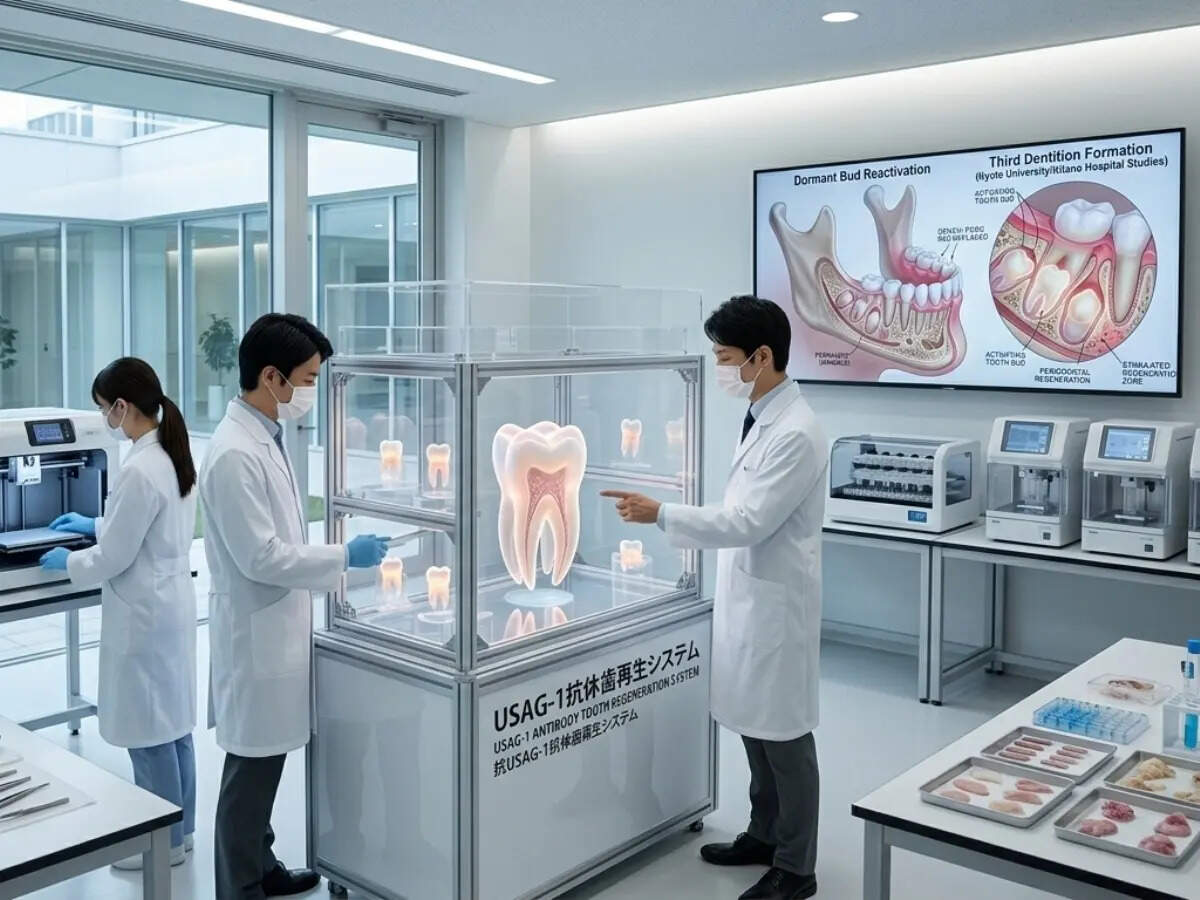
This new tooth regrowth drug could make dentures obsolete. Image credit – Gemini
Clinical testing includesCurrently, the clinical trials conducted by Kyoto University Hospital involved 30 individuals between the ages of 30 and 64, who had one or more missing teeth. At this point, the primary objective of the experiment was more related to ensuring safety rather than efficiency.The researchers injected limited quantities of TRG-035 into the subjects and monitored their responses to the medication. The scientists studied how the medicine behaves inside the living organisms and determined its optimum dosage.In addition, during the following phases of clinical trials, the researchers will test the effects of the drug on individuals with congenital problems with the development of their teeth.Significance of clinical trialsIf the scientists succeed in developing this technology, it will bring revolutionary changes to dental care. At present, people apply different techniques to fix missing teeth, including implants or prosthetics. Some techniques might involve surgery, which carries certain risks. On the other hand, regenerating teeth implies that the researchers will develop new biological teeth that will fit the jaw perfectly.This innovation is deemed to be revolutionary, according to Dr Chengfei Zhang, an expert conducting dental research. There is still a need for conducting more tests to ensure its safety and efficacy across diverse demographics.Challenges and future directions of TRG-035While this scientific innovation has garnered plenty of attention, there are several challenges to overcome as well.First, the potential implications of the drug are yet to be determined since scientists must ensure that the newly formed teeth form appropriately in the mouth.Obtaining the required regulatory approval also poses an important challenge since authorities like the United States Food and Drug Administration will require a lot of evidence concerning the benefits of the drug to endorse it. The issue of consent is equally essential.Scientists believe that a few years may be required before this treatment can be made available to the general public. According to some forecasts, a possible date could be 2030 if all future trials are successful.In the future, the idea of tooth regeneration will look fairly futuristic.
